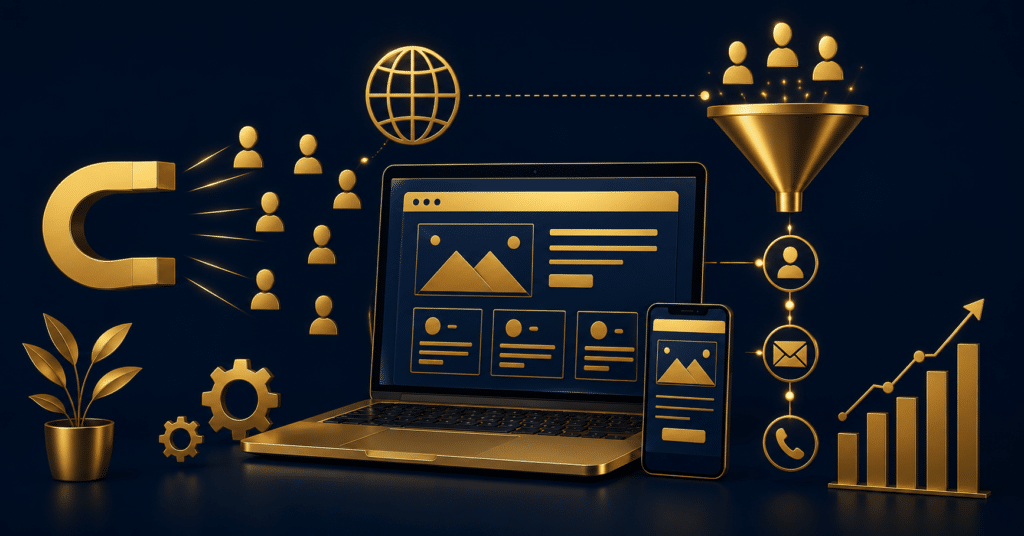
A website development company can have a stunning portfolio. Clean designs. Fast-loading pages. Happy past clients. Everything looks perfect on paper. But the enquiries do not match the quality of the work. Some months bring one or two leads. Some months bring none at all. Meanwhile, other companies with average portfolios keep closing new clients every single month. This is not an unusual problem. It happens across the industry, everywhere. Thousands of website development companies face this same gap. They build great websites. They deliver great results. Yet business growth stays slow, unpredictable, and frustrating.
Here is the hard truth. Good work does not automatically bring good business. Skill and sales are two different things. A company can be excellent at coding, design, and development, and still struggle to get noticed by the right people. It is not the quality of work. It is not the pricing. It is not even the website itself.
The missing piece is a proper system to attract, capture, and convert interested buyers. Without this system, even the best developers stay invisible to the people who need them most. Visitors come and go. Enquiries stay low. Growth feels random instead of predictable. This missing piece has a name. It is called lead generation.
Once a business understands how lead generation actually works, everything starts to shift. Visitors turn into real enquiries. Enquiries turn into consultations. Consultations turn into paying clients. The entire growth process becomes structured, measurable, and repeatable, instead of being left to luck or word-of-mouth alone.
This is exactly where the real transformation begins.
Why Talented Developers Still Struggle to Get Clients

Skill is not the problem. Most developers are skilled. They know coding. They know design. They know how to build fast, secure websites. But building websites and getting clients are two different skills.
Here is the real issue. Rohan’s website has no clear path for visitors. People land on his site, look around, and leave. There is no strong call to action. There is no simple way to book a call. There is no trust-building content. Also, nobody is actively bringing the right visitors to his website. He is hoping people will find him. Hope is not a strategy.
This is where a Digital Marketing Company becomes important. Skill builds the product. Marketing builds the pipeline. Both are needed to grow.
Traffic Is Not the Same as Clients
Many website development companies focus only on traffic. More visitors, they think, means more business. That is not always true.
Imagine 500 people visit your website in a month. Out of those, how many are actually looking to hire a website developer? Maybe 20. Out of those 20, how many trust you enough to fill a form or call you? Maybe 3. Traffic alone does not pay your bills. Converted traffic does.
This is the biggest gap in most website development businesses. They get visitors. They do not get enquiries. This gap is exactly what Lead Generation Services are built to close.
Where Lead Generation Services Fit In
Lead Generation Services turn random website visitors into real, qualified business enquiries. Think of it like a filter. Not every visitor is a lead. A lead is someone who shows real interest. They fill a form. They ask for a quote. They book a call. They message on WhatsApp.
A good Lead Generation Consultant studies your business first. They understand your ideal client. They understand your services. Then they build a system to attract, capture, and convert the right people.
This is not about running random ads. It is about building a complete process that brings serious buyers to your door, again and again.
How Clients Actually Choose a Website Development Company Today
Buying a website is not a quick decision anymore. Clients research a lot before they pick anyone.
Here is what usually happens.
First, someone searches on Google. They type things like “website development company near me” or “eCommerce website developer.”
Second, they open 4 to 5 websites. They compare designs, pricing, and services.
Third, they check portfolios. They want to see real work, not just claims.
Fourth, they read reviews. Google reviews, testimonials, and case studies matter a lot here.
Fifth, they check response time. If you reply fast, you win trust instantly.
Sixth, they book a free consultation or demo call.
Finally, after all this, they choose one company.
This entire journey can take days or even weeks. If your business is missing at any single step, you lose the client to someone else. This is exactly why Lead Generation Services cover the full journey, not just one part of it.
Which Website Development Services Bring the Best Leads
Not all services attract the same type of client. Understanding this helps you target the right audience.
Business Websites attract small business owners and startups. They want a simple, professional online presence. These leads are usually quick to close.
eCommerce Websites attract product-based businesses. These clients care about payment integration, speed, and design. Their budget is usually higher.
WordPress Websites attract clients who want flexibility and easy content updates. Bloggers, agencies, and service businesses often prefer this.
Shopify Websites attract online store owners specifically. These leads are focused and ready to invest, since Shopify is built for selling.
Custom Websites attract bigger companies with specific needs. These leads take longer to close but bring higher project value.
Corporate Websites attract established businesses that care about branding and credibility. These are high-trust, high-value leads.
Landing Pages attract businesses running ad campaigns. They need fast, focused pages to convert traffic. These leads often need ongoing marketing support too.
SaaS Websites attract tech founders and product companies. These clients understand digital marketing well and expect data-driven results.
Website Redesign attracts businesses unhappy with their current site. These leads are often frustrated and ready to switch quickly.
Website Maintenance attracts existing website owners who need ongoing support. These are recurring, stable leads that build long-term revenue.
Knowing which service to promote, and to whom, makes your lead generation far more effective.
The Complete Lead Generation System, Not Just Random Tactics
Many companies think lead generation means just running Facebook ads or doing SEO. That is a wrong idea. Real lead generation is a connected system, where every part supports the other.
Here is how it works together.
1.SEO Services
SEO Services help your website rank higher on Google. This is one of the most valuable long-term investments a website development company can make. When your site ranks well, people find you without any ad spend. They are already searching for services like yours. That means the traffic is warm from the start. It takes time to build, usually a few months, but the results last much longer than paid campaigns. Once you rank, you keep getting visitors every single day, without paying for every click.
2.Google Ads and PPC
Google Ads and a skilled PPC Consultant bring instant visibility. When someone searches “hire website developer,” your ad appears right away, at the top of the page. This is powerful because the person is already looking to buy. There is no need to convince them that they need a website. They already know that. A good PPC Consultant makes sure your ad reaches the right audience, avoids wasted clicks, and directs traffic to a page built to convert. This channel works fast, often bringing leads within hours of launching a campaign.
3.Meta Ads
Meta Ads, meaning Facebook and Instagram ads, help you reach business owners while they scroll through their feeds. These people are not actively searching for a developer at that moment. But a strong visual, a clear offer, or a short video can catch their attention instantly. This channel works well for building brand awareness and reaching small business owners who may not think about hiring a developer until they see something that sparks interest. Good creatives and simple messaging matter a lot here, since attention spans are short on social media.
4.LinkedIn Ads
LinkedIn Ads work well for reaching business decision-makers, especially for corporate and SaaS website projects. This platform is full of professionals, founders, and managers who make buying decisions for their companies. Unlike Facebook or Instagram, the audience here is already in a business mindset. This makes LinkedIn ideal for higher-value projects, where the client needs to trust your expertise before spending a bigger budget. Though the cost per click is often higher, the quality of leads is usually stronger too.
5.YouTube Ads
YouTube Ads build trust through video. Seeing your work explained on video builds more confidence than reading plain text on a website. A short video showing your process, your team, or a client success story feels more real and personal. People remember what they see and hear far better than what they simply read. This channel works especially well for showcasing your portfolio in action, walking viewers through a website you built, and explaining the results it brought for your client.
6. Landing Pages
Landing Pages turn ad clicks into actual enquiries. This is where all your paid traffic ends up. A good landing page is simple, clear, and has one strong call to action. It avoids distractions like unnecessary links or long menus. It focuses on one goal only, whether that is booking a call, filling a form, or starting a WhatsApp chat. If your landing page is confusing or slow, even the best ad campaign will fail to bring real leads.
7. Google Business Profile
Google Business Profile builds local trust. Reviews and ratings here influence buying decisions heavily, especially for clients searching in a specific city or region. When someone sees a strong star rating along with genuine client reviews, it removes doubt instantly. This profile also shows up directly in local search results and Google Maps, giving your business extra visibility without any extra ad cost. Keeping this profile updated, active, and full of real reviews should be a regular priority.
8. WhatsApp
WhatsApp makes it easy for leads to message you instantly, without filling long forms. Many clients prefer this over email, since it feels quicker and more personal. A simple “Chat with us on WhatsApp” button on your website or ad can significantly increase enquiries. People are used to messaging apps in daily life, so this channel removes friction from the buying process and feels far less formal than sending a business email.
9. Email Marketing
Email Marketing keeps in touch with leads who are not ready yet. Not everyone buys on day one. Some people need time to think, compare options, or get budget approval. Sending helpful emails, like project examples, tips, or special offers, keeps your business in their mind. When they are finally ready to move forward, you are the company they remember and trust, simply because you stayed in touch consistently without being pushy.
10. CRM
CRM, or customer relationship management software, tracks every lead. Nothing gets lost or forgotten. Without a CRM, leads often sit in someone’s inbox or notebook, waiting to be followed up on, and many simply get missed. A CRM organizes every enquiry, shows where each lead is in the buying process, and reminds your team when to follow up. This small tool alone can prevent a huge amount of lost business simply by keeping everything visible and organized.
11. Remarketing
Remarketing shows ads again to people who visited your site but did not convert. Most buyers need multiple touchpoints before deciding, sometimes five, six, or even more. Remarketing keeps your brand visible to these visitors as they browse other websites or scroll through social media later. This gentle reminder often brings back people who were interested but got distracted or were not ready to act during their first visit.
12. Analytics and Conversion Tracking
Analytics and Conversion Tracking show what is working and what is not. Without data, you are just guessing. These tools tell you exactly which ad, keyword, or page brought in a lead. They show where visitors drop off and where they take action. This information helps you spend your budget wisely, fix weak points quickly, and repeat the strategies that are actually bringing results, instead of relying on assumptions.
13. Follow-ups
Follow-ups close the loop. Many leads are lost simply because nobody followed up on time. A person may show interest today, but if nobody responds quickly, they move on to another company within hours. Prompt, consistent follow-up, whether through a call, message, or email, often makes the difference between winning and losing a project. This final step turns all the previous effort, from ads to landing pages, into an actual paying client.
When all these parts work together, you get a real lead generation engine. Removing even one piece weakens the entire system.
Why Some Companies Fail Even After Spending on Ads

Spending money on ads does not guarantee results. Many website development companies spend thousands and still get poor leads.
Here are the common mistakes.
- Mistake one: No clear target audience. Ads are shown to everyone, not the right people. This wastes budget fast.
- Mistake two: Weak landing pages. Traffic comes, but the page is slow, confusing, or has no clear offer. Visitors leave without acting.
- Mistake three: No follow-up system. Leads come in, but nobody calls or messages them quickly. Interest fades fast.
- Mistake four: Ignoring SEO. Companies rely only on paid ads. The moment the budget stops, leads stop too. SEO Services build a foundation that keeps working long-term.
- Mistake five: No tracking. Without proper tracking, you do not know which ad or keyword brought the lead. You cannot improve what you do not measure.
The solution? Work with an experienced Digital Marketing Consultant who understands the full picture. Fix the website, fix the message, fix the targeting, and fix the follow-up. Ads alone are just one small part of success.
Trust Is the Real Deciding Factor
People do not hire website developers just because of price. They hire based on trust.
A strong portfolio shows what you can actually build. Real projects speak louder than promises.
Case studies go one step further. They show the problem, the solution, and the result. This proves you understand business, not just design.
Testimonials and reviews build social proof. When other clients say good things about you, new clients believe it faster than any ad.
Certifications show you follow proper standards and are serious about your craft.
Response time matters more than people think. If you reply within minutes, clients feel valued. If you take days, they move on.
Pricing transparency removes fear. Hidden costs create doubt. Clear pricing builds confidence.
Communication ties everything together. Clients want to feel heard, not sold to. A calm, honest conversation often closes more deals than a flashy pitch.
How to Measure If Your Lead Generation Is Actually Working
Numbers tell the real story. Here is what to track.
CPL (Cost Per Lead) shows how much you spend to get one enquiry. Lower is better, but only if quality stays high.
CAC (Customer Acquisition Cost) shows how much it costs to actually convert a lead into a paying client.
ROI (Return on Investment) shows if your marketing spend is actually making you profit.
CLV (Customer Lifetime Value) shows how much a client is worth over time, including repeat projects and maintenance work.
Conversion Rate shows what percentage of visitors become leads, and what percentage of leads become clients.
Lead Quality matters more than lead quantity. Ten serious leads are better than a hundred people who never respond.
Appointment Booking Rate shows how many leads actually book a call or consultation. This is often the final step before closing a deal.
Tracking these numbers regularly helps you improve constantly, instead of guessing what works.
What the Future of Lead Generation Looks Like
Lead generation keeps changing. Staying updated helps you stay ahead.
AI and automation are speeding up how leads are captured and responded to. Chatbots now answer questions instantly, any time of day.
Predictive marketing uses data to guess which leads are most likely to buy, so you can focus your energy there first.
Personalization is becoming the standard. Generic messages are ignored. Personalized offers get attention.
Conversational marketing, through chat and messaging apps, is replacing long contact forms. People want quick, human-like conversations.
Video content continues to grow. Short videos explaining your work build trust faster than plain text.
Voice search is changing how people search too. More people ask questions out loud on their phones, so websites need to answer those questions naturally.
Companies that adapt to these trends early will always stay ahead of their competition.
Why Experience Matters in Lead Generation

Strategies and tools matter, but experience is what makes them actually work.
This is where Gaurav Dubey stands out. He has worked in digital marketing since 2013, which means over a decade of real, hands-on experience. He has completed more than 950 projects and served clients across 15+ countries. That kind of experience is not built overnight. It comes from testing what works, fixing what fails, and understanding how different industries and markets behave.
As a Lead Generation Consultant, Gaurav Dubey focuses on building complete systems, not quick fixes. As a PPC Consultant, he knows how to turn ad spend into real, profitable results. As a Digital Marketing Consultant , he looks at the full picture, from SEO to social media to conversions, making sure every piece works together.
For website development companies, working with someone who has this depth of experience can be the difference between spending money on ads and actually building a steady stream of qualified clients.
Frequently Asked Questions (FAQs)
1. What are Lead Generation Services, and why does a website development company need them?
Lead Generation Services are strategies and tools used to attract potential clients and turn them into real business enquiries. A website development company needs them because having a great portfolio is not enough anymore. Without a proper system to attract, capture, and follow up with interested people, most visitors leave without taking action. Lead Generation Services fix this gap. They combine SEO Services, ads, landing pages, and follow-up systems to bring in people who are genuinely interested in hiring a developer. This means fewer wasted efforts and more consistent enquiries every month. For a growing website development business, this is often the missing piece between doing great work and actually getting paid for it regularly.
2. How is SEO different from paid ads for lead generation?
SEO Services help your website rank naturally on Google search results over time. It takes longer to show results, usually a few months, but the traffic keeps coming without ongoing ad spend. Paid ads, on the other hand, bring instant visibility. The moment you turn on a campaign, your website can appear at the top of search results or on social media feeds. However, once you stop paying, that traffic stops too. The smartest approach uses both together. SEO builds a strong, long-term foundation, while ads bring quick, short-term results. Relying on just one method usually limits your growth, while combining both creates a steady and reliable flow of leads.
3. How long does it take to see results from lead generation efforts?
This depends on the strategy used. Paid ads, like Google Ads or Meta Ads, can bring leads within days, sometimes even hours after launching a campaign. SEO Services usually take longer, often three to six months, before you see strong, consistent results on search engines. Landing pages and remarketing campaigns can show quicker improvements once traffic is already flowing. Overall, most website development companies start noticing real, steady improvement within two to three months of running a proper, combined lead generation system. Patience matters here. Quick wins are possible with ads, but long-term, stable growth comes from consistent effort across SEO, content, and follow-up systems working together over time.
4. What makes a lead “qualified” instead of just random traffic?
A qualified lead is someone who shows genuine interest in your services and matches your ideal client profile. This could mean they filled a contact form, requested a quote, booked a consultation call, or messaged you directly on WhatsApp. Random traffic, in comparison, is just people visiting your website without taking any meaningful action. They might be students researching, competitors checking your site, or people who are not ready to hire anyone. A good lead generation system focuses on quality over quantity. It targets the right audience with the right message, so the people who reach out are actually likely to become paying clients, saving your team time and effort on genuine follow-ups.
5. Which digital marketing channels work best for a website development company?
There is no single “best” channel. The most effective approach combines several channels together. SEO Services bring long-term, free traffic. Google Ads, managed by a skilled PPC Consultant, bring quick visibility for people actively searching for developers. LinkedIn Ads work well for reaching business owners and decision-makers, especially for corporate projects. Meta Ads, on Facebook and Instagram, are useful for visual storytelling and local reach. YouTube Ads build trust through video content. Google Business Profile strengthens local credibility with reviews. Each channel plays a different role in the client’s buying journey, from awareness to final decision. Using them together, as one connected system, brings far better results than relying on just one channel alone.
6. How much should a website development company spend on lead generation?
There is no fixed number that works for everyone. Budget depends on your business size, target market, and growth goals. Many companies start with a modest monthly budget for ads and SEO, then increase it once they see positive returns. A good rule is to track your Cost Per Lead and Customer Acquisition Cost closely. If a lead generation campaign brings clients whose project value is much higher than what you spent to get them, it makes sense to increase that investment. Working with an experienced Digital Marketing Consultant can help you set a realistic starting budget, avoid overspending on the wrong channels, and gradually scale up as your results improve.
7. Why do some website development companies get leads but still fail to close deals?
Getting leads is only half the job. Many companies lose deals because of slow response times, unclear pricing, weak communication, or a lack of trust-building content like case studies and testimonials. Sometimes, the leads themselves are not properly qualified, meaning they were never a good match to begin with. Other times, there is no proper follow-up system, so interested leads are simply forgotten. Closing deals requires a smooth process after the lead comes in, including quick replies, clear proposals, and confident communication. A strong lead generation system does not just bring enquiries. It also supports the sales process with the right trust signals, timing, and consistent follow-up to turn interest into an actual paying project.
8. What role does a Lead Generation Consultant play in this process?
A Lead Generation Consultant studies your business, your services, and your ideal clients before building any strategy. They identify where your current process is losing potential clients, whether it is weak website messaging, poor targeting, or missing follow-ups. Then they build a complete, connected system covering SEO, ads, landing pages, and tracking, instead of random, disconnected efforts. They also monitor performance regularly, using data to improve results over time. Essentially, they act as a guide who understands both marketing and business growth. For a website development company, this means less guesswork and more consistent, measurable results, since the consultant brings proven experience instead of trial-and-error learning.
9. How do I know if my lead generation strategy is actually working?
Tracking the right numbers tells you the truth. Watch your Cost Per Lead to see how much each enquiry costs you. Check your Conversion Rate to see how many visitors turn into leads, and how many leads turn into clients. Monitor your Customer Acquisition Cost against your Customer Lifetime Value to ensure you are profitable in the long run. Also, pay attention to lead quality, not just quantity. If you are getting many leads but few are serious buyers, something needs adjusting. Regularly reviewing these numbers, ideally every month, helps you spot problems early and improve your strategy continuously, instead of waiting months to realize something was not working properly.
10. Is it worth hiring a Digital Marketing Company instead of doing lead generation in-house?
For many website development companies, hiring a Digital Marketing Company or an experienced consultant saves both time and money in the long run. Building an in-house team means hiring, training, and managing multiple specialists, including someone for SEO, someone for ads, and someone for content. This can be expensive and slow, especially for small to mid-sized companies. An experienced external partner already has the tools, skills, and proven systems ready to use. They can start generating results faster and adjust strategies based on years of prior experience across different industries. However, the right choice depends on your budget, team size, and long-term goals, so it is worth evaluating both options carefully.
Final Thoughts: Growth Is a System, Not a Guess
Building a successful website development company is not just about writing good code or designing beautiful pages. It is about being found, being trusted, and being chosen, again and again. The gap between a great portfolio and a growing business is filled by one thing: a proper lead generation system. It brings the right visitors, builds trust at every step, and turns interest into real, paying projects.
Businesses that treat lead generation as a serious, ongoing system, not a one-time effort, are the ones that grow steadily year after year. The tools and channels will keep changing. But the businesses that consistently attract, nurture, and convert the right leads will always stay ahead.
Growth is not luck. It is a system. And once that system is in place, it keeps working for you, month after month.