The way people find a place to eat has changed. Nobody flips through a phone book anymore. Nobody waits for a friend to mention a good cafe. Today, people just pick up their phone.
They search on Google. They scroll through Instagram. They check Facebook pages. They open Google Maps to see what’s nearby. They browse food apps for reviews and menus. They read what other customers have written before they decide.
This shift is huge for restaurants and cafes. Word of mouth still matters, of course. But it is no longer enough on its own. A restaurant can serve amazing food and still stay empty if nobody finds it online. A cafe can have the best coffee in town and still struggle if its Google listing is outdated or missing photos.
This is where Lead Generation Services come in. In simple words, lead generation means attracting people who are interested in your food, your cafe, or your restaurant, and turning that interest into an action. That action could be a table booking, a phone call, a takeaway order, a delivery order, or a walk-in visit.
This blog explains everything about Lead Generation Services for restaurants and cafes. We will cover why it matters, which channels work best, and how to build a strong Lead Generation Strategy that brings real results over time.
Why Restaurants and Cafes Need a Steady Flow of Customers?
Running a restaurant or cafe is not easy. Rent needs to be paid every month. Staff salaries do not stop. Ingredients need to be fresh, which means regular buying. Empty tables cost money even when no one is eating there.
This is why a steady flow of customers matters so much. One good weekend does not fix a slow month. A business needs regular bookings, regular enquiries, regular takeaway orders, regular delivery orders, and regular repeat customers.
Repeat customers are especially valuable. They already trust your food. They already know your service. Bringing them back costs less than finding a brand-new customer. But new customers matter too, because every business needs fresh faces to grow.
A smart Lead Generation Strategy helps balance both. It keeps new enquiries coming in, while also reminding past customers to come back.
What Does Lead Generation Mean for Restaurants and Cafes?
Lead generation, for a restaurant or cafe, simply means getting more people to take an interest in your business and then take the next step. That next step could be many things.
It could be a table reservation through your website. It could be a phone call asking about today’s menu. It could be someone opening Google Maps and clicking “Directions” to visit you. It could be a WhatsApp message asking if you deliver to their area.
Every one of these actions is a “lead.” And every lead is a chance to turn a curious visitor into a paying customer. Good Lead Generation Services focus on creating more of these chances, in a steady and honest way.
Who Can Benefit from This?
Lead generation is not just for big restaurant chains. It works for almost every kind of food business.
Fine-dining restaurants can use it to attract customers looking for a special evening out. Fast-food restaurants can use it to promote quick offers and combo deals. Family restaurants can use it to reach people planning a weekend meal with kids. Cloud kitchens, which have no physical dine-in space, depend almost completely on online visibility to get orders.
Bakeries can use it to promote fresh cakes, pastries, and festive orders. Dessert cafes can use it to show off their menu through photos and reels. Local cafes and small food outlets can use it to become the go-to spot in their neighbourhood.
No matter the size or type of business, the same basic idea applies: be visible where your customers are already searching.
A Deep Look at the Four Main Channels
There are many ways to generate leads online. But four channels stand out as the most powerful for restaurants and cafes: Google Ads, Meta Ads, LinkedIn Ads, and SEO Services. Let’s look at each one closely.
Google Ads
Google Ads is one of the fastest ways to get in front of hungry customers. When someone types “best cafe near me” or “restaurants open now,” Google Ads can place your business right at the top of the search results.
This works well because the person searching already has intent. They are not just browsing. They are actively looking for a place to eat, right now. Google Ads also allows location targeting, so your ads only show to people near your restaurant or within your delivery zone.
A well-managed Google Ads campaign can bring in table bookings, phone calls, and website visits within days. But it needs regular monitoring. Poor keyword choices or weak landing pages can waste budget quickly. This is why many restaurant owners choose to work with a PPC Consultant who understands the food and beverage industry.
Meta Ads (Facebook and Instagram)
Food is visual. People love to see a plate before they decide to order it. This is exactly why Meta Ads, which run on both Facebook and Instagram, work so well for restaurants and cafes.
A short reel of sizzling food, a carousel of your best dishes, or a simple photo ad with a discount offer can catch attention while people are simply scrolling. Meta Ads also let you target people by location, age, and interests, so your ads reach people who are likely to visit.
Meta Ads are especially useful for building awareness. Someone might not order today, but after seeing your page a few times, they remember you when they are hungry. This is why Meta Ads work best as part of a bigger Lead Generation Strategy, not as a one-time campaign.
LinkedIn Ads
LinkedIn is not the first platform people think of for restaurants. But it has a real use case, especially for fine-dining restaurants, cafes near business hubs, and venues that host corporate events.
LinkedIn Ads can help you reach office employees, HR managers planning a team lunch, or event planners looking for a venue for a business meeting. If your restaurant offers catering, private dining, or event spaces, LinkedIn can connect you with decision-makers who plan such events.
This channel is more niche than Google or Meta. But for the right kind of restaurant, it can bring in high-value bookings that are worth the effort.
SEO Services
SEO Services help your restaurant or cafe show up naturally in search results, without paying for every click. This includes optimizing your website, your Google Business Profile, and your content so that Google trusts your business as a relevant and reliable result.
Good SEO Services cover many parts. Technical SEO makes sure your website loads fast, works well on mobile, and has no broken links or errors that confuse search engines. On-page SEO makes sure your menu pages, location pages, and blog content use the right words that customers actually search for.
SEO takes longer to show results compared to ads. But once it starts working, it keeps bringing in customers without extra cost per click. This makes it one of the most valuable long-term investments for any restaurant or cafe.
Google Business Profile and Local SEO
Your Google Business Profile is often the very first thing a potential customer sees. It shows your photos, your address, your hours, your reviews, and your menu, all in one place, right on Google’s search results and Google Maps.
Keeping this profile updated is not optional anymore. Wrong opening hours can send customers away. Old photos can make your food look less appealing than it really is. Missing menu details can push people to a competitor with a fuller listing.
Local SEO ties closely to this. It means optimizing your online presence so that people searching in your area can find you easily. This includes your business name, address, and phone number being consistent everywhere online, and having enough positive reviews to build trust.
Google Maps Visibility
Google Maps has become a daily habit for many people. Before choosing a place to eat, they often check Maps first, to see the distance, the ratings, and the photos.
Strong Google Maps visibility means your restaurant appears when people search nearby, and it shows up with good ratings, clear photos, and accurate details. This visibility often comes from a mix of Local SEO, customer reviews, and regular activity on your Google Business Profile.
Landing Pages That Convert
A landing page is a simple, focused webpage built for one purpose. It could be for online reservations, a special festive menu, or a delivery offer.
A good landing page loads quickly, looks clean on mobile, and has a clear call-to-action, such as “Book a Table” or “Order Now.” It avoids clutter and unnecessary information. The goal is to make it easy for a visitor to take action without getting confused or distracted.
The Power of Online Reviews
Reviews carry a lot of weight in the restaurant business. Before trying a new place, most people check the star rating and read a few recent reviews.
Positive reviews build trust. Even a few honest, detailed reviews can influence someone to choose your restaurant over another. Responding to reviews, both positive and negative, shows that you care about customer feedback. This builds a stronger connection with your audience and improves your online reputation over time.
WhatsApp Marketing and Follow-Ups
WhatsApp has become a comfortable, personal channel for many customers. Restaurants can use it to confirm table bookings, share daily specials, or follow up with customers who have not visited in a while.
A simple message like a lunch offer or a weekend special can bring a past customer back. WhatsApp follow-ups also work well after a customer enquiry, since a quick reply often makes the difference between winning or losing that booking.
Social Media Content
Beyond paid ads, regular social media content helps keep your restaurant in people’s minds. Photos of new dishes, short videos of your kitchen, behind-the-scenes clips, and customer testimonials all add up over time.
Consistency matters more than perfection here. A restaurant that posts regularly, even simple content, tends to stay more visible than one that posts occasionally with highly polished content. Social Media Services can help manage this consistently, so the restaurant team can focus on running the business.
Email Marketing
Email marketing is often overlooked by restaurants, but it still works well. Sending a monthly newsletter with new menu items, upcoming events, or loyalty offers keeps your restaurant connected with people who have already shown interest.
Unlike social media, where algorithms decide who sees your post, email goes directly to the customer’s inbox. This makes it a reliable channel for staying in touch with your regular customers.
Remarketing
Remarketing means showing ads again to people who already visited your website or interacted with your social media, but did not book or order. Maybe they got busy. Maybe they wanted to compare options first.
A gentle reminder ad, perhaps with a small offer, can bring them back to complete the action. Remarketing tends to have a lower cost and a higher chance of conversion, since these people already know your brand.
CRM for Restaurants and Cafes
A CRM, or customer relationship management system, helps track customer details, past orders, and preferences. For a restaurant, this could mean knowing a regular customer’s favourite table, their usual order, or their birthday month for a special offer.
A good CRM setup, combined with a proper Lead Generation Strategy, helps convert one-time visitors into loyal, repeat customers.
Online Reservations
An easy online reservation system removes friction. Customers do not always want to call and wait on hold. A simple booking form on your website or through Google can capture a reservation instantly, any time of day.
Call Tracking and Conversion Tracking
Call tracking helps restaurants understand which ads or pages are actually bringing in phone enquiries. Conversion tracking goes a step further, tracking bookings, form submissions, and online orders back to the exact source that brought them in.
Without this tracking, it becomes very hard to know which part of your marketing is actually working. With it, you can spend your budget more wisely, focusing on what brings real results.
Mobile-Friendly Websites
Most people search for restaurants on their phones, often while they are already hungry and in a hurry. A website that loads slowly or looks broken on mobile will lose these visitors quickly.
A mobile-friendly website is no longer a nice-to-have. It is a basic requirement for any restaurant or cafe that wants to capture online enquiries.
Online Reputation Management
Online reputation management means actively watching and improving how your restaurant is seen online. This includes managing reviews, responding to feedback, and addressing complaints before they escalate.
A single bad experience, if left unanswered, can influence many potential customers who read about it later. Managing your reputation well helps protect the trust you have built over time.
Common Lead Generation Mistakes
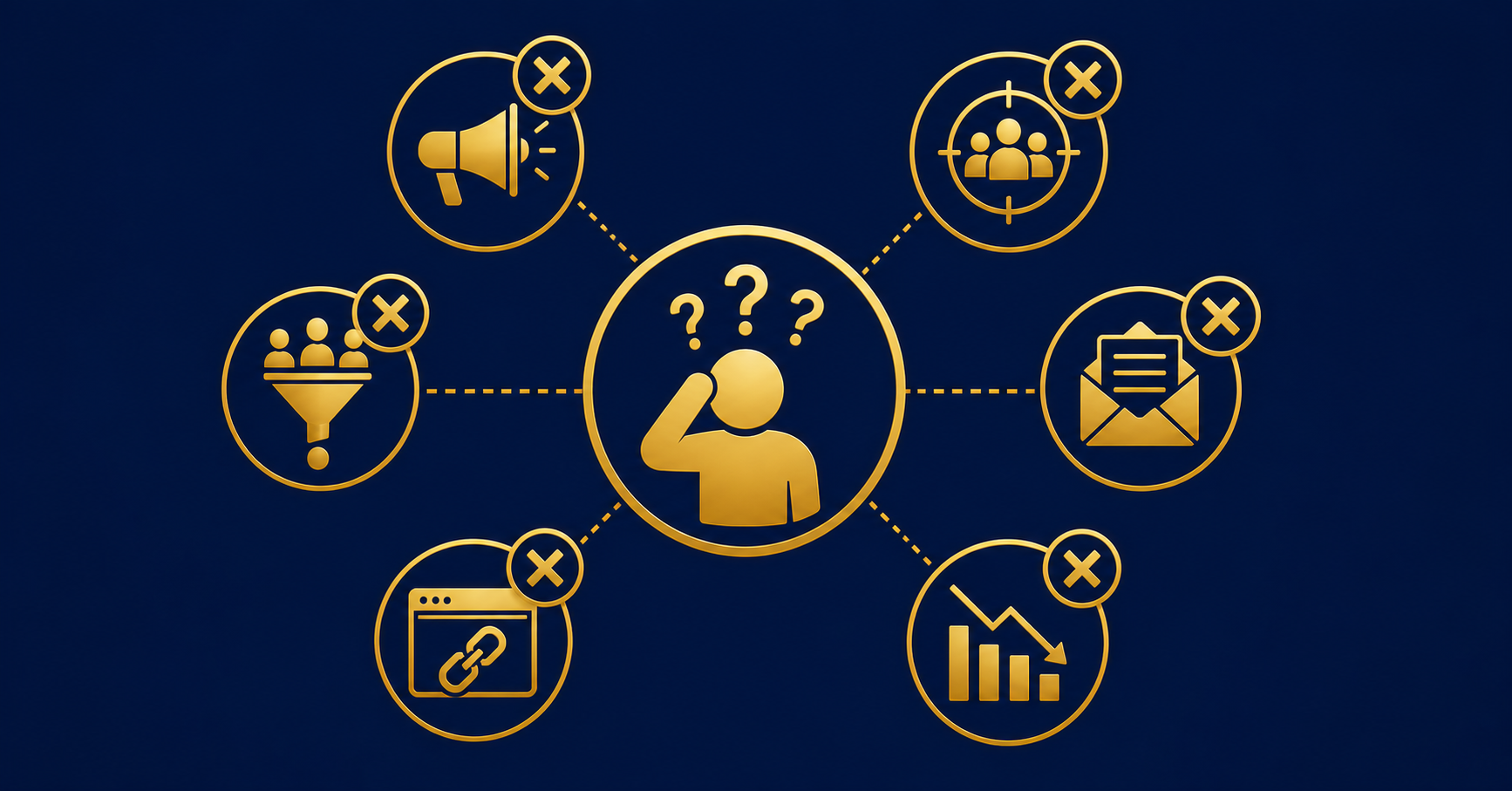
Many restaurants make similar mistakes when trying to attract customers online. A few common ones include:
- Ignoring their Google Business Profile and leaving it outdated
- Running ads without a clear goal or proper tracking
- Using a slow or non-mobile-friendly website
- Not responding to online reviews or customer messages
- Posting on social media inconsistently, then giving up too soon
- Focusing only on new customers and ignoring past ones
Avoiding these mistakes alone can make a noticeable difference in how many leads a restaurant receives.
Practical Tips for Better Results
Start with your Google Business Profile, since it is free and often the highest-impact fix. Keep your website simple, fast, and mobile-friendly. Post real photos of your food instead of only using stock images. Reply to reviews within a day or two, whenever possible.
Track where your bookings and calls come from, so you know what is actually working. And be patient. Good results build up steadily, not overnight.
Measuring ROI: CPL, CAC, CLV, and Conversion Rate
To know if your marketing is working, you need to measure it properly. A few key numbers help with this:
CPL (Cost Per Lead): How much you spend, on average, to get one enquiry or booking.
CAC (Customer Acquisition Cost): How much it costs, overall, to turn a lead into a paying customer.
CLV (Customer Lifetime Value): How much a customer is worth over their entire relationship with your restaurant, including repeat visits.
Conversion Rate: The percentage of leads that actually turn into bookings or orders.
Tracking these numbers regularly helps you understand what is working and where your budget is best spent.
Choosing the Right Lead Generation Consultant for Your Restaurant or Cafe
With so many channels and moving parts, many restaurant and cafe owners prefer to work with an experienced Lead Generation Consultant, rather than managing everything on their own. The right consultant understands the food and beverage industry, knows which channels work best for your type of business, and builds a Lead Generation Strategy that fits your budget and goals.
Gaurav Dubey has been working in digital marketing since 2013, with a strong focus on helping businesses grow through honest, results-driven strategies. Over the years, he has completed more than 950 projects and served clients from over 15 countries, giving him a broad understanding of what works across different markets and business types.
His expertise spans Lead Generation Services, SEO Services, PPC Services, Social Media Services, Technical SEO, and complete digital marketing strategies. This wide experience means he does not just focus on one channel in isolation. Instead, he looks at the full picture, from your Google Business Profile to your ad campaigns, and builds a plan that works together as a whole.
For restaurants and cafes specifically, this kind of full-picture approach matters. A great Google Ads campaign with a poor landing page will not convert well. A strong social media presence without proper Technical SEO on your website will not fully capture organic search traffic. A trusted Lead Generation Consultant helps connect all these pieces into one steady, working system.
Frequently Asked Questions (FAQs)
1.How long does it take to see results from lead generation?
The time required to see results from lead generation depends on the marketing channels being used, the location of the restaurant or cafe, competition, and the target audience. Paid advertising platforms such as Google Ads and Meta Ads can start generating enquiries, bookings, and orders within a few days when campaigns are properly targeted. SEO Services usually take longer because the website needs time to build authority and improve its search rankings. It can take a few months to see strong organic growth, but the benefit is that SEO can continue bringing relevant visitors without paying for every click. A combination of paid advertising and SEO can therefore provide both quick visibility and long-term growth.
2.Is Google Ads better than SEO for restaurants?
Google Ads and SEO serve different purposes, so one cannot always be considered better than the other. Google Ads can provide immediate visibility when someone searches for terms such as “restaurants near me,” “best cafe near me,” or “family restaurant in [city].” This makes it useful for attracting customers who are already looking for a place to eat. SEO Services, on the other hand, help restaurants build organic visibility over time and attract customers without paying for every individual click. Restaurants can benefit from using both strategies together. Google Ads can generate faster traffic while SEO builds a strong and sustainable online presence.
3.Do small cafes really need digital marketing?
Yes. Digital marketing can be extremely useful even for a small local cafe. Customers often search Google and social media before deciding where to eat, especially when they are looking for a cafe nearby. A strong online presence helps a small cafe appear in front of people who may not know about it yet. Local SEO, Google Business Profile optimization, social media content, and targeted advertising can help attract nearby customers. A small cafe does not necessarily need a huge marketing budget. A focused strategy that targets the right local audience can help increase visibility, enquiries, visits, and repeat customers.
4.How important are online reviews for restaurants?
Online reviews are one of the most important trust factors for restaurants and cafes. Before visiting a new restaurant, many customers check its Google rating and read comments from previous visitors. Reviews can influence their expectations about food quality, service, cleanliness, pricing, and overall experience. A restaurant with many genuine positive reviews may appear more trustworthy to potential customers. Businesses should also respond professionally to reviews, including negative ones. A thoughtful response shows that the restaurant listens to its customers and takes feedback seriously. Regularly encouraging satisfied customers to leave honest reviews can also strengthen the restaurant’s online reputation.
5.What is the role of a Google Business Profile in lead generation?
A Google Business Profile can play a major role in helping restaurants and cafes attract local customers. When someone searches for a restaurant or cafe nearby, the profile may appear with important information such as the business name, location, phone number, opening hours, photos, reviews, menu information, and directions. This can become the customer’s first interaction with the business. Keeping the profile accurate and updated makes it easier for customers to decide whether to visit or contact the restaurant. Regularly adding genuine photos, updating business information, responding to reviews, and providing accurate details can improve the overall customer experience and support local visibility.
6.Can social media alone generate enough leads for a restaurant?
Social media can generate enquiries and attract customers, but relying on it as the only marketing channel may limit your reach. Platforms such as Facebook and Instagram are excellent for showcasing food, ambience, special offers, new menu items, customer experiences, and events. Attractive content can help people discover a restaurant and build interest before they visit. However, customers also use Google when they have strong buying intent, such as searching for a restaurant nearby. This is why social media works best when combined with paid advertising, Google Business Profile optimization, and SEO Services. A complete digital marketing strategy allows the restaurant to reach customers at different stages of their decision-making process.
7.How does remarketing help restaurants?
Remarketing helps restaurants reconnect with people who have already interacted with their business but did not complete an action. For example, someone may visit the restaurant’s website, view the menu, check a special offer, or visit a booking page without making a reservation. Remarketing allows the restaurant to show relevant advertisements to these potential customers again. This reminder can encourage them to return and complete their booking or order. Since the audience has already shown some interest in the restaurant, remarketing can be more focused than advertising to completely new users. When used properly, it can help restaurants recover potential customers who may otherwise be lost.
8.What makes a restaurant website effective for lead generation?
An effective restaurant website should make it extremely easy for visitors to take action. Since many customers browse restaurants from their smartphones, the website should be mobile-friendly, fast, and simple to navigate. Important information such as the menu, location, opening hours, contact details, reservation options, and ordering options should be easy to find. Clear buttons such as “Book a Table,” “Order Now,” or “Contact Us” can guide visitors toward the next step. High-quality food photographs and genuine customer reviews can also build trust. A well-designed website does more than provide information; it turns interested visitors into bookings, orders, enquiries, or visits.
9.Should cloud kitchens focus differently than dine-in restaurants?
Yes. Cloud kitchens need a slightly different lead generation approach because they do not depend on customers walking into a physical restaurant. Their success is strongly connected to online visibility, delivery orders, repeat customers, and digital promotions. A cloud kitchen should focus heavily on local search visibility, online ordering, social media advertising, attractive food content, and clear delivery information. Strong SEO Services can also help the business appear in relevant local searches. Since customers cannot experience the ambience of a physical restaurant, food photographs, reviews, ratings, menu presentation, and promotional offers become especially important for building trust and encouraging online orders.
10.How can a restaurant measure if its marketing is actually working?
A restaurant should track more than likes, followers, or website visitors to understand whether its marketing is generating real business results. Important metrics include Cost Per Lead (CPL), Customer Acquisition Cost (CAC), Customer Lifetime Value (CLV), and Conversion Rate. CPL shows how much it costs to generate an enquiry, while CAC measures the cost of acquiring an actual customer. CLV helps estimate how much value a customer brings through repeat visits and orders over time. Conversion tracking can show which campaigns lead to bookings or orders, while call tracking can identify which advertisements generate phone enquiries. Reviewing these numbers regularly helps restaurants understand what is working and where their marketing budget should be improved.
Conclusion
The way customers find restaurants and cafes has changed for good. Google, Instagram, Facebook, Google Maps, food apps, and online reviews are now the new word of mouth. Restaurants and cafes that adapt to this shift tend to see more bookings, more enquiries, and more repeat customers over time.
Lead generation is not about quick tricks or unrealistic promises. It is about being visible where your customers are already looking, making it easy for them to take action, and building trust through consistent, honest effort across ads, SEO, and social media.
If you are looking for a reliable Digital Marketing Consultant to guide your restaurant or cafe through this process, Gaurav Dubey brings over a decade of hands-on experience, a strong track record of 950+ projects, and a proven understanding of what works for food businesses of every size. Working with an experienced Digital Marketing Company or consultant like him can help your restaurant or cafe build a steady, sustainable flow of customer.