Having a hotel website is not enough to fill rooms. Travellers compare many hotels before they book. They look at location, price, room types, reviews, amenities, photographs, cancellation policies, and offers. If your hotel does not answer their questions fast, they move on.
That is why lead generation for hotels matters. A hotel needs a system that attracts people who truly want to stay. It must also turn their interest into enquiries and bookings.
Many hotels turn to Lead Generation Services for this. These services help you find the right guests, capture their interest, and follow up on time.
Traffic and leads are not the same thing. Traffic means people visit your website. A qualified enquiry means someone asks about dates, rooms, or prices. That person is ready to talk. Your goal is more of the second kind.
Understand Your Ideal Hotel Guest
Every hotel serves different guests. Before you run any campaign, decide who you want to attract.
Business travellers search close to the travel date. They want fast Wi-Fi, a desk, and an easy commute. Couples plan earlier and care about views, privacy, and dining. Families look at room size, safety, and breakfast. Solo travellers focus on price, safety, and location
Tourists want to be near attractions. Wedding guests and corporate groups need several rooms and clear group rates. Long-stay guests want kitchen access and monthly pricing. Conference guests need meeting rooms and nearby transport.
Each group searches differently, books at a different time, and has a different budget. A resort near a beach should not talk to a business traveller the way a city hotel does.
This research is the base of a strong Lead Generation Strategy. Look at your past bookings. Check which guest types stay most often and which pay the best rates. Then build your campaigns around them.
Build a Hotel Website That Converts Visitors Into Enquiries
A hotel website should do more than show nice photographs. It should help visitors decide.
Start with clear room categories. Show real photographs for each room. List amenities, location details, and nearby attractions. Add pricing or booking information and show availability where you can.
Add reviews, current offers, and your cancellation policy. Guests worry about hidden rules. When you remove that doubt, they feel safer to enquire or book.
Make contact easy. Put your phone number, a WhatsApp button, and a short enquiry form on key pages. Offer a direct booking option with a clear button.
Most travellers browse on their phones. So your design must be mobile-friendly and fast. Each page needs one clear call to action, such as “Check Availability” or “Book Direct.”
Use SEO to Attract Travellers Searching for Hotels

Search engine optimisation helps your hotel appear when people look for a place to stay. This brings steady visitors without paying for each click.
Travellers search with different intent. Some type “hotels in Jaipur.” Others search “hotels near the airport” or “family hotel near the beach.” Some want budget stays, and others want luxury. Many search for specific amenities, like “hotel with a pool.”
Build pages for these searches. Create a strong page for each room type. Add pages for services like weddings, meetings, and events. Write destination content that helps travellers plan their trip
Location matters most. Mention your city, area, and landmarks naturally in your content. Many hotels work with SEO Services providers to plan this structure and find the right search terms. Whether you do it yourself or hire help, the goal is the same. You want the right guests to find the right page.
Focus on Local SEO
Hotels depend on local search. People often search with a place name before they choose where to stay.
Your Google Business Profile is the most important tool here. Fill it out fully. Add your categories, amenities, photographs, and a link to your booking page. Update it often with offers and new images.
Keep your hotel name, address, and phone number the same everywhere. Use the same details on your website, listings, and travel sites. Mixed details confuse search engines and guests.
Reviews also help your map visibility. Ask happy guests to leave feedback and reply to it.
Create local landing pages too. For example, a hotel near a convention centre can have a page called “Hotel Near the Convention Centre.” Add directions, travel times, and nearby places. This answers real search queries.
Improve Technical SEO
Even a beautiful website can fail if search engines cannot read it. Technical SEO fixes this
Start with speed. Slow pages lose guests quickly. Compress your hotel photographs, because large images are a common cause of delay. Then check mobile usability. Buttons should be easy to tap, and text should be easy to read
Next, make sure search engines can crawl and index your pages. Submit an XML sitemap. Use HTTPS so the site is secure. Fix broken links and remove duplicate pages. Duplicate room pages can compete with each other.
Use a simple site structure. Link your home page to room pages, offer pages, and guides. Good internal links help guests and search engines find content.
Where it fits, add structured data. It can help search engines understand your hotel, its rooms, and its reviews. Technical problems hurt both user experience and search visibility. So fix them early.
Use Google Ads to Capture High-Intent Hotel Searches
Google Ads lets you reach travellers who are searching right now. These people often have clear intent to book.
Search campaigns work well for hotels. Target location-based keywords, like “boutique hotel in Goa” or “business hotel near the airport.” Bid on your own hotel name to protect your brand. Also bid on non-brand terms to reach new guests.
Add negative keywords to avoid wasted clicks. For example, block “hotel jobs” or “free hotel.” Write clear ad copy that mentions your best feature, such as free breakfast or a central location.
Send each ad to a matching landing page. A guest who clicks “family rooms” should land on your family rooms page. Set location targeting and keep a firm daily budget.
Most importantly, track conversions. Measure enquiries, calls, and bookings, not just clicks. Many hotels use PPC Services to manage this work. Others hire a PPC Consultant to audit their account and improve results. Either way, remarketing can then bring back visitors who did not act the first time.
Use Meta Ads to Create Demand and Retarget Travellers
Facebook and Instagram ads help you reach people before they search. Travel is a visual choice, so these platforms suit hotels well.
Use strong photographs of rooms, pools, food, and views. Short room tour videos and Reels work well. Show the experience, not just the building.
Run seasonal campaigns. Promote a summer family package, a couple’s weekend stay, or a festive offer. A hill-station hotel can promote a “weekend escape” to people in nearby cities.
Meta Ads also support retargeting. You can show ads to website visitors or to people who engaged with your posts. This reminds them of your hotel while they plan.
Keep each ad simple. Use one image or video, one message, and one clear button.
Use Social Media to Build Hotel Demand
Social media helps travellers get to know your hotel before they are ready to book. Instagram and Facebook are the main choices. Depending on your guests, YouTube or LinkedIn can also help.
Post room tours, amenity highlights, and food. Share views, nearby attractions, and local experiences. Show events, guest moments, and behind-the-scenes clips of your team. This builds trust and personality.
Consistency matters more than perfection. Regular posts keep your hotel familiar. When a guest finally plans a trip, your name already feels known.
Many hotels do not have time to manage this. In that case, Social Media Services can help with planning, content, and posting. Still, keep your own voice and real photographs at the centre.
Create a Strong Hotel Lead Generation System
Most visitors will not book on their first visit. So you need ways to capture their interest.
Offer several easy options. Add enquiry forms, WhatsApp chat, and call buttons. Provide booking request forms and special forms for groups, events, weddings, and corporate stays. Add a newsletter sign-up for people who are not ready yet.
Then build a clear process. Every enquiry should reach the right person fast. Someone should reply, record the details, and follow up.
This is where Lead Generation Services can add structure. They help set up forms, tracking, and follow-up steps so no enquiry gets lost.
What makes a hotel lead qualified? A qualified lead has a real need. They share dates, guest numbers, or a budget. Their request fits what your hotel offers. A person asking for a ten-room wedding block in your peak month is a qualified lead. A person asking for a job is not.
Use WhatsApp for Faster Hotel Enquiries

Guests want quick answers. WhatsApp gives them a simple way to ask.
They may ask about room availability, pricing, or check-in and check-out times. They may want details on amenities, location, or airport transfers. Groups and event planners often have special requirements.
Speed wins bookings. A guest who waits a day may book somewhere else. Aim to reply within minutes during working hours. Use saved replies for common questions, but keep a personal tone.
Do not stop at the first answer. Follow up if the guest goes quiet. Send a polite reminder with the room details or a helpful offer. A proper follow-up routine turns many casual questions into bookings.
Use Content Marketing to Attract Travellers
Content brings in people who are still planning their trip. They may not know which hotel to choose yet.
Write guides that help. Good topics include things to do in your city and the best time to visit. You can also share local attractions, family travel tips, and business travel advice. Weekend itineraries and local food guides work well too.
For example, a city hotel can publish “A Perfect Weekend in Udaipur.” The guide can suggest sights and meals. It can then mention your hotel as a comfortable base.
Useful content introduces your hotel early. It also builds trust. Guests remember the property that helped them plan.
Use Reviews and Guest Content to Build Trust
Reviews strongly shape hotel choices. Guests trust other guests more than they trust ads.
Collect honest reviews, written testimonials, guest photographs, and short video reviews. Share user-generated content with permission. Real images of real stays feel more believable than polished shots.
Reply to every review where you can. Thank happy guests by name and mention something specific. For negative reviews, stay calm and professional. Apologise where it is fair, explain what you will fix, and offer to talk offline.
Never post fake reviews or misleading testimonials. They damage trust and can break platform rules.
Use Remarketing to Recover Lost Booking Opportunities
Many visitors look at your site and leave. They may still be comparing options.
Remarketing lets you reconnect with them. You can target people who viewed rooms, checked prices, or reached the booking page. You can also target people who started an enquiry, contacted the hotel, or stayed before.
Keep the message helpful. Remind a visitor of the room they viewed. Share a limited offer or highlight a benefit, such as free cancellation
Avoid showing the same ad too often. Set a frequency limit and a time window. Too many ads annoy people and hurt your brand.
Use Email Marketing for Repeat Bookings
Email helps you stay in touch with past guests and interested visitors. It costs little and works well for repeat stays.
Send seasonal offers and weekend packages. Share news about new services or local events. Offer repeat-guest rates and special occasion ideas. Include destination content that inspires the next trip.
Always get consent before you email anyone. Make it easy to unsubscribe. Send only relevant messages. A family should not receive offers meant for business travellers
Keep emails short, with one clear action. Over time, this builds loyalty.
Track the Right Hotel Lead Generation Metrics
You cannot improve what you do not measure. Track the numbers that show real results.
Website traffic shows how many people visit. Hotel enquiries and qualified leads show how many are truly interested. Cost per lead tells you what each enquiry costs. Booking conversion rate shows how many enquiries become stays. Cost per booking shows the true price of winning a guest.
Click-through rate shows how well your ads attract attention. Website conversion rate shows how well your site turns visitors into action. Direct booking percentage shows how much you depend on third-party sites. Repeat booking rate shows guest loyalty.
Do not chase traffic, impressions, or followers alone. They look nice but do not fill rooms. Focus on enquiries, bookings, and revenue.
When Should a Hotel Hire a Digital Marketing Professional?
Some hotels manage marketing in-house. Others reach a point where expert help makes sense. This often happens when ad costs rise, enquiries stay flat, or the team lacks time.
A Digital Marketing Consultant can review your whole setup and set priorities. A Digital Marketing Company can provide a larger team for ongoing work. A Lead Generation Consultant can focus on improving how you capture and convert enquiries.
A good professional should help with audience research, SEO, Google Ads, and Meta Ads. They should also handle lead generation, conversion tracking, and website optimisation. Analytics, remarketing, and campaign optimisation belong on that list too.
Ask for clear reports and realistic goals. Be careful with anyone who promises guaranteed bookings.
Build One Connected Hotel Marketing Funnel
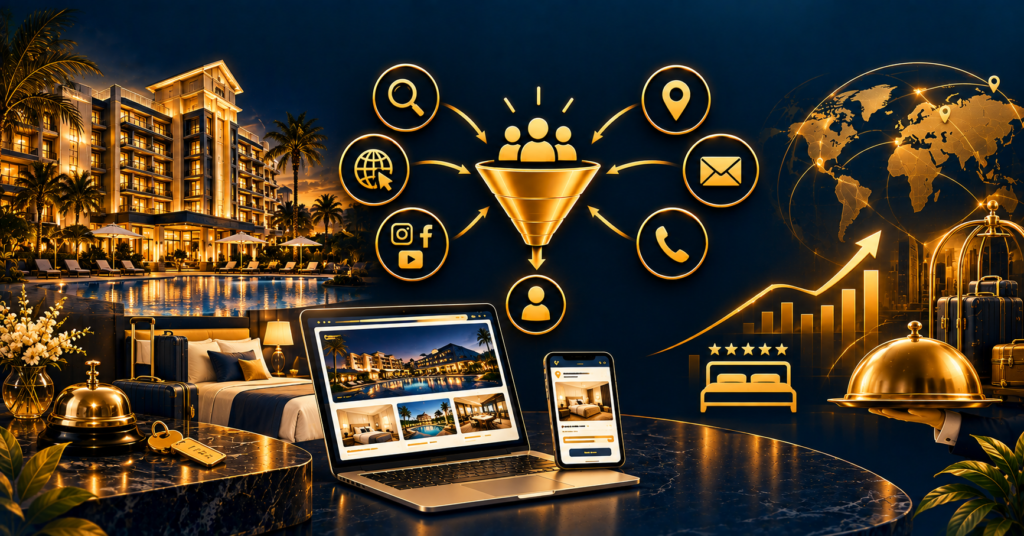
Each channel works better when it connects to the others. Think of the guest journey as one path:
Google Search / Social Media → Hotel Website → Room or Service Page → Enquiry / Booking → Follow-Up → Stay → Review → Repeat Booking
SEO brings organic visitors who are already searching. Paid ads capture high-intent searches. Social media creates interest and keeps your hotel familiar. Remarketing brings visitors back. WhatsApp and email support enquiries and repeat bookings.
When these parts work together, guests move smoothly from discovery to stay. Many hotels use Digital Marketing Services to plan and run this full funnel in a coordinated way. Review each step regularly to find where guests drop off.
Why Hotels Work With an Experienced Digital Marketing Consultant?

Experience matters in hotel marketing. Seasons change, competition shifts, and ad platforms keep updating.
Gaurav Dubey has worked in digital marketing since 2013. He has completed 950+ projects and has worked with clients in 15+ countries. His work covers SEO, paid advertising, lead generation, website marketing, and digital strategy.
This range helps when a hotel needs a connected plan. Search, ads, website, and follow-up all affect each other. An experienced professional can spot weak points and suggest practical fixes. Results still depend on your market, budget, and property. No honest expert can promise exact outcomes.
Frequently Asked Questions (FAQs)
- How can hotels generate more leads online?
Hotels can attract more guests by combining a clear website, search visibility, paid ads, and social content. Make it easy to enquire through forms, calls, and chat. Then reply fast. Tracking where each enquiry comes from helps you spend more on what works.
- How can SEO help a hotel get more bookings?
SEO helps your hotel appear when people search for places to stay. Good room pages, local pages, and travel guides bring in visitors with real interest. Over time, this traffic grows without paying for each click, and it often leads to direct bookings.
- How can Google Ads help hotels attract guests?
Google Ads shows your hotel to people searching right now. You can target specific locations and search terms, like “hotel near the airport.” Send clicks to a matching page. Measure bookings and enquiries, not just clicks.
- How can social media help hotels generate enquiries?
Social platforms let guests see your rooms, food, and surroundings. Regular posts build familiarity and trust. Add a clear link or message button, so interested viewers can ask questions or check availability easily.
- How can hotels get more direct bookings?
Make booking on your own site simple and attractive. Offer perks that third-party sites do not, such as free breakfast or flexible cancellation. Show clear prices and reviews. Also keep in touch with past guests through email.
- How can hotels reduce booking abandonment?
Many guests leave because of confusion or hidden costs. Show full prices early and keep forms short. Make the site fast on mobile. Then use reminder ads or emails to bring back people who left before finishing.
- How can WhatsApp help hotels get more enquiries?
WhatsApp gives guests a quick, familiar way to ask questions. They can check availability, prices, and transfers in minutes. Fast, friendly replies often win the booking. Follow up politely if a guest goes quiet.
- Why are hotel reviews important for generating bookings?
Travellers trust the experiences of other guests. Strong reviews reduce doubt and help them choose. Replying to reviews shows that you care. Honest feedback also helps you improve your service.
- How can hotels attract more local and international travellers?
Local guests respond to weekend deals, events, and nearby getaways. International guests need clear details in simple English, easy payment options, and airport transfer information. Target each group with the right message and platform.
- How long does hotel digital marketing take to generate results?
Paid ads can bring enquiries within days or weeks. Search optimisation usually takes several months to build momentum. Results depend on your location, competition, budget, and website quality. Steady testing and tracking improve results over time.
Conclusion
Hotels can generate more enquiries and bookings by using several channels together. SEO brings in search visitors. Google Ads capture high-intent demand. Meta Ads and social media build interest. Content, reviews, and a strong website build trust. WhatsApp, email, remarketing, and proper follow-up turn interest into stays.
No single channel does everything. Success comes from testing, tracking, and improving each step. Start with your ideal guest, fix your website, and measure real enquiries and bookings. Small, steady improvements add up to a stronger flow of guests.